
Choosing the Right Cantilever Umbrella Base for Stability and Safety


Choosing the Right Cantilever Umbrella Base for Stability and Safety
Table Of Contents
- Introduction
- Why Does the Base Play a Crucial Role in Balance and Safety?
- Factors to Consider When Choosing a Cantilever Umbrella Base
- Types of Cantilever Umbrella Bases
- What is the Best Base for a Cantilever Umbrella?
- Common Mistakes to Avoid When Selecting a Cantilever Umbrella Base
- Final Thoughts
- FAQs on Choosing the Right Cantilever Umbrella Base for Stability and Safety
-
When choosing the perfect cantilever umbrella for your outdoor space, selecting the right base is just as important as the umbrella itself. Unlike traditional umbrellas, cantilever models have an off-center design that places additional stress on the base, making stability and safety a top priority.
Whether you’re setting up your umbrella for residential or commercial use, understanding the key factors that influence base performance can ensure your umbrella stays firmly in place and protected from the elements. This guide will walk you through everything you need to know about choosing the right cantilever umbrella base for ultimate stability and long-term use.
-
Why does the Base play a Crucial Role in Balance and Safety?
A cantilever umbrella relies on a sturdy base to counterbalance its weight and prevent tipping, especially in windy conditions. A poorly chosen base can lead to instability, damage, or even safety hazards. Choosing the right base for cantilever umbrella ensures the umbrella remains secure and functional in various weather conditions.
-
What Factors Should You Consider When Choosing a Cantilever Umbrella Base?
You need to consider the following factors while selecting the base for cantilever umbrella:
Material Options
The material of the base affects durability and performance. Common options include:
-
Concrete – Heavy and stable, but can crack over time.
-
Metal (Steel) – Durable but may rust if not coated properly.
Weather Resistance
Since cantilever umbrellas are mostly exposed to the elements, it's important to choose a cantilever umbrella with base that can withstand the following:
-
Wind – Heavy bases prevent tipping.
-
Rain – Rust-resistant coatings on metal bases prolong durability.
Portability vs. Permanent Setup
-
Portable bases – Ideal for those who want to move their umbrella around.
-
Fixed bases – Better suited for commercial or long-term residential setups where stability is a priority.
-
-
What are The Different Types of Cantilever Umbrella Bases?
Here are the common types of bases for cantilever umbrellas:
In-Ground Mount or Fixed Bases
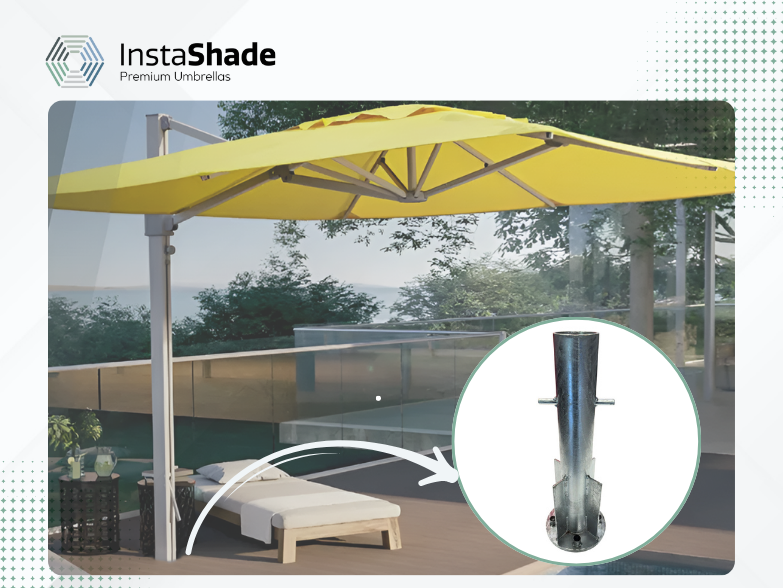
In-Ground Mount or Fixed Base Cantilever Umbrella In-ground mount bases are permanent fixtures that are installed directly into concrete, decking, or another solid surface. This type of base offers maximum stability and is particularly well-suited for areas prone to high winds or unpredictable weather.
-
How It Works
The base is embedded securely into the ground, ensuring the umbrella pole is firmly anchored. This installation makes it a long-term solution for outdoor spaces like patios, decks, pool areas, or commercial venues.
-
Pros of In-Ground Mount Base:
a. Exceptional wind resistance
b. Clean, seamless appearance with no bulky base in sight
c. Long-lasting and durable
-
Cons of In-Ground Mount Base:
a. Requires professional installation
-
b. Not suitable for renters or those who want to relocate the umbrella
-
In-Ground Mount Bases are Best For:
a. Permanent outdoor spaces
b. Coastal or windy areas
-
c. Commercial settings like restaurants, resorts, and public patios
Steel Frame Freestanding Weighted Bases
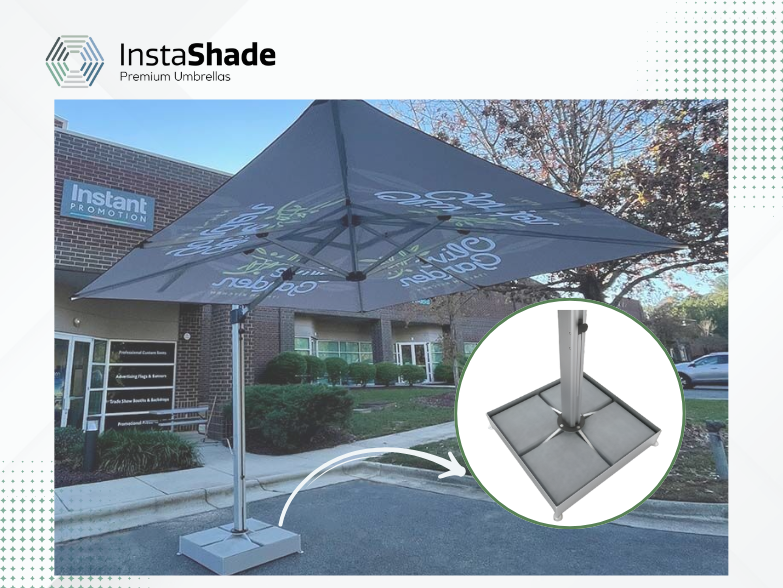
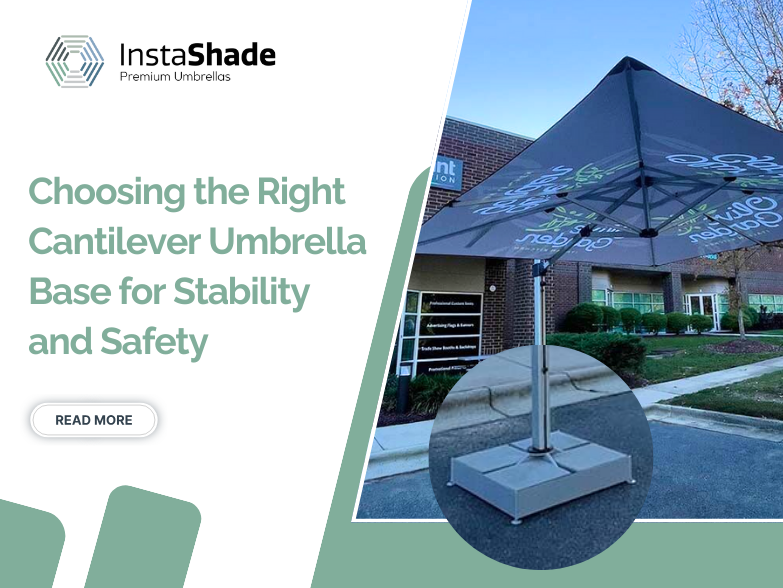
Cantilever Umbrella with Steel Frame Freestanding Weighted Base This is one of the most flexible and popular options for residential and commercial users. Steel frame bases typically feature a cross-shaped frame that holds heavy weights such as sandbags or concrete slabs.
-
How does It Work?
The base frame sits on the ground, and weights are placed over it to provide stability. These bases are designed for easy installation and can be relocated if needed.
-
Pros of Steel Frame Base:
a. Adjustable weight capacity to match umbrella size
b. Portable — easy to move around your space
c. Simple to install without professional help
-
d. Suitable for various surfaces — concrete, tiles, decking, grass
-
Cons of Steel Frame Base:
-
a. May require regular checks to ensure weights are intact
-
b. Exposed weights can be visually bulky (although covers are often available)
-
-
Steel Frame Bases are Best For:
a. Residential patios, gardens, and pool areas
-
b. Event spaces that may require flexible umbrella placement
c. Renters or temporary setups
Steel Ground Plate
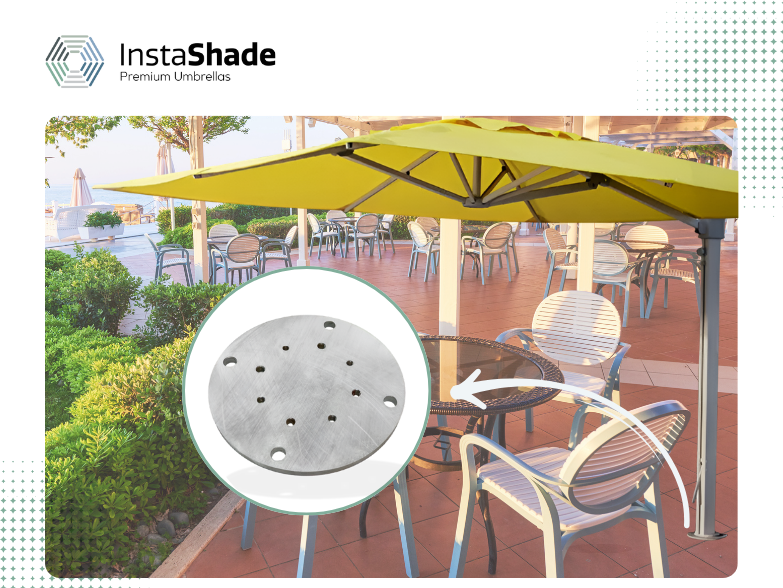
Cantilever Umbrella with Steel Ground Plate Base Steel ground plates offer a sleek and low-profile mounting option for cantilever umbrellas. These plates are bolted directly into a solid surface, such as concrete or decking, and serve as a secure anchor point for the umbrella. The plate remains flush with the ground, maintaining a minimalist look.
-
How does It Work?
The plate is installed using heavy-duty bolts, ensuring a strong connection to the ground. The umbrella pole is then attached to the plate when needed and can be removed when not in use, leaving just the discreet plate behind.
-
Pros of Steel Ground Plate:
a. Very stable and wind-resistant
b. Minimal visual footprint
-
c. Ideal for modern outdoor spaces where aesthetics matter
d. Umbrella can be removed when needed
-
Cons of Steel Ground Plate:
a. Requires some installation effort
-
b. Fixed placement, not easily repositioned once installed
-
Steel Ground Plates are Best For:
a. Contemporary outdoor spaces with minimalist designs
-
b. Decks, patios, and poolside areas with concrete or timber decking
-
c. Homeowners who want a semi-permanent yet discreet solution
-
-
What is the Best Base for a Cantilever Umbrella?
The best base depends on your needs:
-
a. For maximum stability – In-ground mounts or steel ground plates.
-
b. For flexibility – Freestanding weighted bases with sand or water.
-
c. For windy areas – A heavier base (at least 90-120 kg) to prevent tipping.
-
d. For commercial spaces – Fixed bases (in-ground mount or steel ground mount) ensure long-term security.
-
-
Common Mistakes to Avoid When Selecting a Base for Cantilever Umbrella
Selecting the right base for cantilever umbrella is more than just guesswork; many owners unknowingly make these common mistakes. Let’s explore them so you can make a confident choice.
Choosing a Base That’s Too Light
A lightweight base can make your umbrella unstable, leading to potential tipping in strong winds.
Ignoring Material Durability
Some materials may degrade quickly in harsh weather. Ensure your base is UV-resistant, rust-proof, and durable.
Not Considering Future Adjustments or Upgrades
If you plan to upgrade to a larger umbrella in the future, choose a base that can accommodate different sizes.
-
Final Thoughts
Selecting the right base for your cantilever umbrella is just as important as choosing the umbrella itself. The correct base ensures your umbrella stays stable, secure, and ready to withstand changing weather conditions. Whether you need the rock-solid support of an in-ground mount, the flexibility of a freestanding weighted base, or the sleek durability of a steel ground plate, your choice should align with your space and long-term plans.
At InstaShade, we offer a range of premium cantilever umbrellas with bases designed to match every setup — from residential patios to high-traffic commercial venues. Explore our collection and find your perfect fit today.
-
FAQs on Choosing the Right Cantilever Umbrella Base for Stability and Safety
1. What is a Cantilever Umbrella Base?
▶A cantilever umbrella base is a weighted or fixed support structure designed to provide stability and balance to a cantilever umbrella. Unlike traditional umbrellas with a central pole, cantilever umbrellas have an off-set design, requiring a sturdy base to prevent tipping and ensure safe usage. These bases can be filled with sand, water, or concrete, or they may be permanently mounted to the ground.
2. How Do You Hide the Cantilever Umbrella Base?
▶To maintain a clean and aesthetically pleasing outdoor space, you can hide a cantilever umbrella base by:
-
a. Placing decorative furniture around it, such as outdoor planters, benches, or side tables.
-
b. Using a base cover, which is designed to conceal the weighted section while blending with patio décor.
-
c. Using in-ground mount base to integrate it into the outdoor setting.
-
d. Arranging outdoor rugs or mats over low-profile bases for a seamless look.
3. How Do I Move a Cantilever Umbrella Base?
▶Moving a cantilever umbrella base depends on its type:
-
a. Freestanding steel frame weighted bases (filled with sand )can be emptied to make them lighter and easier to transport.
-
b. For heavy fixed bases, using a hand truck or dolly can help move them safely.
-
c. Disassembling the umbrella from the base before moving can make transportation easier.
4. Can You Use Plants to Cover the Cantilever Umbrella Base?
▶Yes! Plants can be a stylish way to conceal a cantilever umbrella base. Consider:
-
a. Placing potted plants around the base to blend them into your garden or patio area.
-
b. Using raised planters with trailing greenery to soften the appearance.
-
c. Incorporating artificial plant covers for a low-maintenance solution. Ensure the plants do not obstruct the umbrella’s operation or become a tripping hazard.
5. Do All Cantilever Umbrellas Need Extra Weight for the Base?
▶Yes, most cantilever umbrellas require additional weight to maintain stability, especially in windy conditions. Some high-end models come with pre-weighted bases, but many need to be filled with water, sand, or concrete for proper balance. Permanent installations, such as in-ground mounts, do not require extra weight.
6. How Do You Secure a Cantilever Umbrella Base?
▶To ensure your cantilever umbrella remains stable:
a. Use a heavy base appropriate for your umbrella.
-
b. Anchor the base properly, either by adding sand or water if it’s a fillable type.
-
c. Use ground bolts or brackets for permanent installations.
-
d. Close the umbrella when not in use, especially in high winds.
-
e. Consider additional stabilizers, such as weight bags or support straps, for extra security.
7. What Kind of Base to Use with a Cantilever Umbrella?
▶The best base depends on your setup:
-
a. Freestanding weighted bases (sand-filled) – Ideal for flexible placement in patios or poolside areas.
-
b. Steel ground plates – Suitable for modern settings where a low-profile base is preferred.
-
c. In-ground mounts – Best for permanent installations, providing the highest stability.
-
Need more advice? InstaShade’s experts are here to
help!