
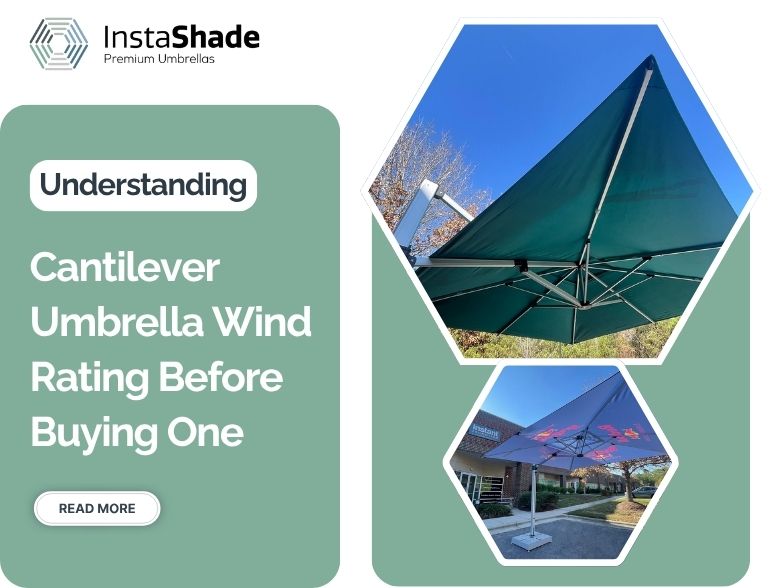
Understanding Cantilever Umbrella Wind Rating Before Buying One


Understanding Cantilever Umbrella Wind Rating Before Buying One
Table Of Contents
- Introduction
- What Is a Cantilever Umbrella Wind Rating?
- Beaufort Wind Scale vs. Cantilever Umbrella Wind Rating
- Key Factors That Affect Wind Ratings
- How to Choose the Right Wind Rating for Your Location
- Tips to Maximise Wind Resistance
- Misleading Marketing Terms to Watch Out For
- Final Checklist Before Buying
- Wrapping Up
- FAQs
-
Cantilever umbrellas are a stylish and functional addition to any outdoor space. However, when it comes to long-term performance, especially in open or breezy areas, the wind rating is a critical factor that often gets overlooked. Understanding the wind rating of a cantilever umbrella not only helps you buy a durable outdoor umbrella but also ensures your and your umbrella's safety and peace of mind.
Let’s begin with-
-
What Is a Cantilever Umbrella Wind Rating?
Wind rating is one of the key performance specifications of the patio outdoor umbrella that tells you the maximum wind speed a cantilever umbrella can safely withstand while open and in use.
It’s usually measured in either miles per hour (mph) or kilometers per hour (km/h).
Why Does Outdoor Umbrella Wind Rating Matter?
Cantilever umbrellas, with their side-post design and overhanging canopies, naturally face more wind pressure than centre-pole options.
Thus, ignoring the patio umbrella wind rating as a factor to make a buying decision might not be the wisest decision because doing so can lead you to end up with:
-
The umbrella that tips or collapses on a windy day
-
Damaged furniture or property surrounding the umbrella
-
Potential safety risks to people near the umbrella
In short, understanding the cantilever outdoor umbrella wind rating helps ensure you're choosing the right umbrella for your setting and avoiding preventable hazards to you and your people.
How Patio Umbrella Wind Ratings Are Determined?
Manufacturers often test wind resistance in wind tunnels, which allow them to simulate close-to-reality, controlled wind conditions. The umbrella is subjected to gradually increasing airflow until it either:
-
Begins to deform,
-
Becomes unstable,
-
Or fails completely.
The rate at which the patio umbrella starts showing signs of damage is the threshold speed. That threshold speed becomes the umbrella’s wind rating, which is often translated into a corresponding level on the Beaufort Scale to give users a clearer idea of how much wind the umbrella can safely withstand.
For example, if an umbrella is rated to handle winds up to 24 mph, this would align with level 5 on the Beaufort Scale—classified as a "fresh breeze," where small trees sway and moderate wind resistance can be felt.
To help you further in choosing the right outdoor cantilever umbrella, refer to the table below showing the correlation of the Beaufort scale and the cantilever umbrella Wind resistance level.
-
-
Beaufort Wind Scale vs. Cantilever Umbrella Wind Rating
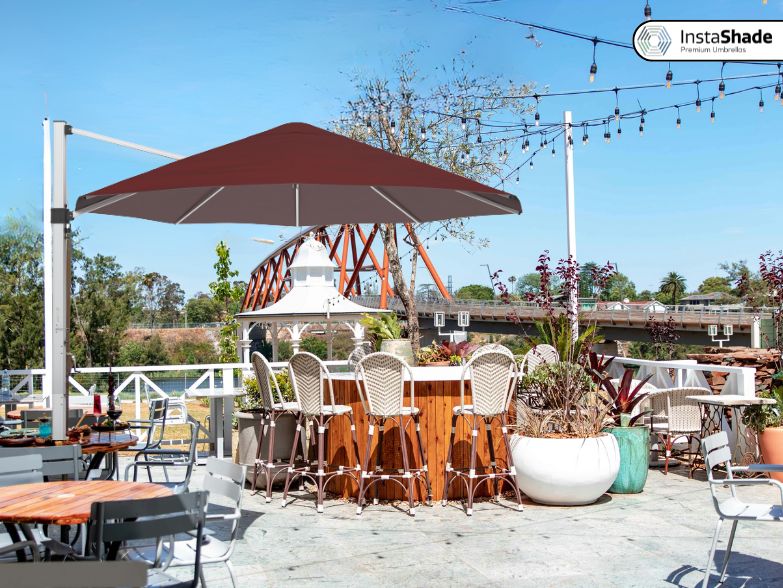
InstaShade Comercial Cantilever Umbrella on a Cafe Terrace The Beaufort Scale is a standardized system used to describe wind strength based on observed conditions, like how trees move or waves behave. Originally developed for maritime use, it's now a helpful reference for outdoor products, such as outdoor patio umbrellas.
Here's a comparison of common umbrella wind ratings and what they mean on the Beaufort scale:
Wind Speed Beaufort Scale Description What It Means for Outdoor Patio Umbrellas 7–15 mph (11–24 km/h) 2–3 Light breeze to gentle breeze Most low-end umbrellas may start to wobble. 16–25 mph (26–40 km/h) 4–5 Moderate to fresh breeze Only high-quality, wind-rated umbrellas can stay open. 26–38 mph (42–61 km/h) 6–7 Strong breeze to near gale Very few umbrellas are safe to use; it's better to close them. 39+ mph (63+ km/h) 8+ Gale or stronger No umbrella should be left open in these conditions. -
What Are The Key Factors That Affect Cantilever Umbrella Wind Rating?
Several design aspects influence a cantilever umbrella's ability to withstand wind and thus its ratings:
Umbrella Size & Shape
Larger canopies create more surface area for wind to push against, increasing strain on the frame.
For example, a cantilever umbrella with a 13 ft or larger canopy has significantly more surface area and tends to experience more strain than an 11.5 ft model.
Not just the dimensions, the shape may affect the wind rating as well. More regular shapes tend to distribute wind loads more evenly than irregular ones.
Round, octagonal, or square canopies are considered regular shapes and generally withstand wind loads more effectively than rectangular ones.
Confused between the round and square shapes? We can help you make the best decision with our blog: Round Patio Umbrella or Square: Which is the Better Option?
Frame & Pole Material
-
Aluminum: Lightweight and rust-resistant, but may flex in strong gusts. However, if made from aircraft-grade aluminum, like InstaShade's cantilever umbrella, it can withstand wind speeds up to 35 mph, depending on other factors as well.
-
Steel: Offers greater strength but adds weight, limiting portability options, and can corrode over time.
-
Fiberglass: Flexible and durable, often used in high-performance or commercial-grade umbrellas for better wind absorption; however, it can be more expensive than aluminum or steel and may be prone to cracking under extreme impact or heavy use over time.
Base Weight & Mounting
The foundation is crucial. Heavier bases or secure mounting methods (e.g., in-ground mounts) provide better stability and reduce the risk of tipping or uplift when compared to a steel frame plate or steel ground plate.
Canopy Fabric Type & Ventilation
-
Fabric Strength: Materials like solution-dyed acrylic and Sunbrella, made especially for outdoor furniture, umbrellas, etc., are known for their exceptional durability, weather resistance, and fade resistance.
-
Vented vs. Non-Vented Tops: A vented canopy allows wind to pass through a built-in opening, reducing uplift pressure and increasing stability. On the other hand, a non-vented canopy traps wind, making it more prone to flipping or straining the frame in gusty conditions by collecting wind underneath.
-
-
How to Choose the Patio Umbrella Wind Rating for Your Location?

InstaShade Cantilever Umbrella Standing Strong On Windy Day Choosing a cantilever umbrella with the appropriate wind resistance levels begins with understanding the specific environmental conditions of your outdoor space. Wind exposure can vary significantly depending on geography, elevation, and architectural surroundings.
Here are several factors to consider before narrowing down your preferred patio umbrella:
Assess Your Typical Weather Conditions
-
Sheltered Areas (e.g., city balconies, enclosed patios, suburban backyards):
These locations are generally protected from strong gusts due to surrounding buildings or fencing. A cantilever umbrella with a moderate wind rating (e.g., 20–30 km/h or 12–18 mph) is often sufficient, especially when paired with a stable base, for instance, a weighted base. A moderate rating (Beaufort 5–6) is usually sufficient for sheltered areas. -
Open Spaces (e.g., large lawns, golf courses, wide courtyards)
These areas allow wind to move freely with little obstruction. Opt for umbrellas with a higher wind rating (e.g., 40–60 km/h or 25–37 mph), and consider models that include vented canopies, reinforced frames, and a Beaufort rating of 6-7.
For example, InstaShade’s cantilever umbrella can withstand wind speeds up to 35mph with a permanent mounting option: an in-ground mount. -
High-Exposure Zones (e.g., rooftops, beachfront patios, hilltop locations)
Elevated or coastal settings are more susceptible to sudden wind gusts and turbulence. For these locations, look for wind-rated umbrellas that have been tested under extreme conditions, ideally those that support permanent or semi-permanent mounts for added safety. Ratings of 60 km/h (37+ mph) or more may be necessary depending on regional wind trends.
Do check our blog, choosing the right cantilever umbrella base for stability and safety to ensure you’re buying the right option for your patio.
Consult Local Wind Data
Use tools such as:
-
Wind zone maps from national weather services or building code resources.
-
Historical wind data is available online for your zip code or region.
-
Seasonal weather trends that highlight peak windy months or storm-prone periods.
Matching umbrella specifications to your local conditions ensures you select a product that will perform reliably and safely year-round.
Consider Location-Specific Risks
-
Urban Wind Tunnels: Narrow gaps between tall buildings can amplify wind speed unexpectedly.
-
Rural Properties: Flat landscapes offer no natural windbreaks, increasing exposure.
-
Proximity to Water: Lakes and oceanfront properties often experience higher wind speeds due to the lack of obstructions.
By carefully evaluating your surroundings and weather patterns, you can choose a cantilever umbrella with the right wind rating for both function and peace of mind.
-
-
Tips to Maximise Wind Resistance of Your Outdoor Cantilever Umbrella
-
Choose a heavier base or use secure mounting options like a weighted base or ground inserts.
-
Always close the umbrella during storms or when not in use.
-
Inspect regularly for signs of wear, fraying fabric, rust, or loosening hardware, as these can weaken performance.
For more information, read 5 crucial positioning tips to avoid wind damage to your cantilever umbrella.
-
-
Misleading Marketing Terms to Watch Out For
Some umbrellas are advertised as:
-
“All-weather”: Doesn’t always include high wind resistance.
-
“Wind-resistant”: Vague unless backed by specific wind speed tests.
Check for actual wind tunnel test results or independent product certifications. Terms like 'wind-resistant' are often meaningless without them.
-
-
Finally, a Short Checklist for Cantilever Umbrellas Before Buying
-
Is the umbrella wind-rated by the manufacturer?
-
Does it match your location's average wind exposure?
-
Are you planning to use a secure base or a fixed mount?
-
Is the canopy vented for improved airflow?
-
Does the warranty cover wind damage?
-
-
Wrapping Up
A cantilever umbrella’s wind rating isn’t just a number; it’s a key consideration for safety and long-term satisfaction. Whether you're buying for a calm patio or a coastal retreat, choosing a model with a reliable wind resistance rating can prevent costly damage and ensure your space remains secure and shaded.
Understanding how your umbrella performs in windy conditions helps you shop with confidence, prepare for the elements, and enjoy outdoor living all year round.
Looking for a wind-resistant cantilever umbrella?
Explore InstaShade’s range of commercial-grade umbrellas engineered with premium materials like aircraft-grade aluminum and high-tension canopies, tested to withstand demanding outdoor conditions.
-
FAQs on Understanding Wind Rating of Cantilever Umbrella
What wind speed can a cantilever umbrella withstand?
▶Most commercial-grade cantilever umbrellas can withstand winds between 20 to 35 mph, depending on size, material, and mounting method.
Are all cantilever umbrellas wind-rated?
▶No, not all are wind-rated. It's important to choose umbrellas tested under controlled conditions and backed by the manufacturer’s specifications.
What’s the safest mounting method for windy locations?
▶Permanent or in-ground mounting is the safest option for high-wind zones, followed by a heavy weighted base for moderately exposed areas.
Can I leave my cantilever umbrella open during windy conditions?
▶It’s best to close and secure the umbrella during high winds or storms, even if it's rated for moderate wind speeds.
Need more advice? InstaShade’s experts are here to help!